Join on WhatsApp
Get the latest updates directly on WhatsApp – motivation, news & more!
 Join On WhatsApp
Learning how to grow mushrooms indoors for beginners can be an incredibly rewarding experience. Whether you’re interested in sustainability, fresh ingredients, or simply trying something new, mushrooms are an ideal crop to cultivate inside your home. This simple step-by-step planting guide will walk you through everything you need to know, from selecting the right mushroom type to harvesting your first crop. Perfect for beginners, this guide ensures a smooth, successful growing experience, no matter your level of gardening expertise.
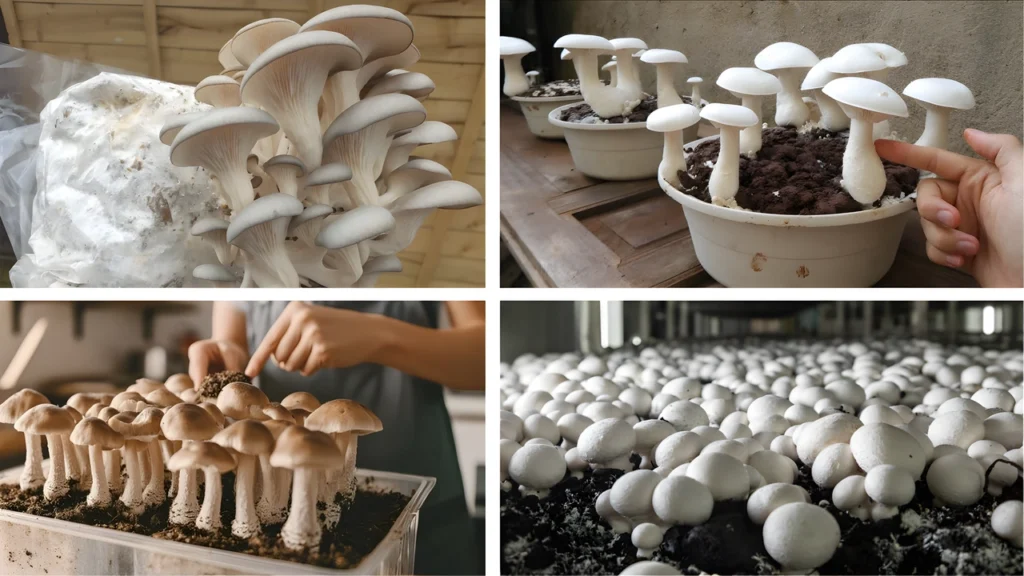
Mushrooms don’t require sunlight, take up very little space, and can grow in containers on a shelf, closet, or basement. This makes them one of the easiest crops for indoor growing. With the proper tools, conditions, and a bit of patience, you can enjoy a continuous supply of fresh mushrooms right from your kitchen or spare room.
1. Choosing the Right Mushrooms to Grow Indoors for Beginners
The first step in learning how to grow mushrooms indoors for beginners is choosing the right mushroom variety. Not all mushrooms are equally beginner-friendly. Some require very specific environments, while others are more forgiving and easier to manage indoors.
Beginner-Friendly Mushroom Types
| Mushroom Type | Flavor Profile | Ease of Growing Indoors | Ideal Temperature | Growth Time |
|---|---|---|---|---|
| White Button | Mild, versatile | Very Easy | 65–75°F | 3–4 weeks |
| Oyster | Delicate, savory | Easy | 60–75°F | 2–3 weeks |
| Shiitake | Rich, earthy | Moderate | 55–75°F | 6–8 weeks |
| Lion’s Mane | Nutty, crab-like | Moderate | 60–70°F | 3–5 weeks |
For complete beginners, white button and oyster mushrooms are the most reliable choices. They grow quickly and are widely available as ready-to-use kits or spores. Selecting an easy strain is essential in following a simple step-by-step planting guide successfully.
2. Preparing the Growing Space for Indoor Mushroom Planting
Setting up the right space is essential when learning how to grow mushrooms indoors for beginners. Mushrooms don’t need light but thrive in cool, dark, and humid conditions. This means you don’t need a fancy setup—just a place where the environment can be controlled.
Ideal Indoor Conditions:
- Temperature: 60–75°F (depending on variety)
- Humidity: 80–95%
- Light: Minimal to none (indirect light is fine)
- Airflow: Gentle ventilation is beneficial
- Cleanliness: Mushrooms are sensitive to contaminants
Basements, closets, or under-sink areas can work perfectly if the temperature and humidity are right. You can also buy mushroom grow tents or small greenhouses to maintain ideal growing conditions. This makes it easier to grow mushrooms indoors successfully as a beginner.
3. Selecting a Growing Medium for Mushroom Planting Indoors
The growing medium, also known as the substrate, provides the nutrients your mushrooms need. Picking the right substrate is a crucial step in any simple step-by-step planting guide on how to grow mushrooms indoors for beginners.
Common Mushroom Substrates:
| Mushroom Type | Ideal Substrate |
|---|---|
| White Button | Compost + manure |
| Oyster | Straw, sawdust, or coffee grounds |
| Shiitake | Hardwood logs or sawdust blocks |
| Lion’s Mane | Hardwood chips or sawdust |
For beginners, pre-packaged mushroom growing kits already include a sterilized substrate. If you’re going DIY, pasteurizing your chosen medium before use is vital to prevent contamination. The correct substrate ensures your mushrooms get a healthy, nutrient-rich start, which is essential for indoor growing success.
4. Step-by-Step Planting Guide for Growing Mushrooms Indoors
Now we get into the heart of the process: the simple step-by-step planting guide to help you grow mushrooms indoors for beginners. These steps work whether you’re using a store-bought kit or starting from spores.
Step-by-Step Instructions:
- Sanitize Your Hands and Tools
Contamination is the number one cause of failed mushroom grows. Always work clean. - Prepare the Substrate
If you’re not using a kit, soak and pasteurize the substrate, then let it cool before use. - Inoculate the Substrate
Mix your mushroom spawn into the prepared substrate. Spread it evenly. - Place in a Grow Container
Use containers with some airflow—plastic bins with holes, bags, or trays. - Incubate in the Dark
Store in a dark, warm space for 2–3 weeks while mycelium spreads through the substrate. - Introduce Humidity and Light
Once white mycelium covers the substrate, move it to a more humid environment with low indirect light. - Harvest When Ready
Most mushrooms are ready to harvest 5–10 days after “pinning” (tiny heads appear).
Following this simple planting guide for beginners helps ensure your mushrooms grow in clean, controlled conditions that result in a healthy, edible crop.
5. Maintaining and Monitoring Mushrooms Indoors for Beginners
Mushrooms are low-maintenance compared to most plants, but they still require monitoring. This section of the guide ensures you keep your mushrooms healthy as they mature.
Tips for Ongoing Care:
- Humidity: Mist the walls of your container or tent 1–2 times per day.
- Airflow: Slight ventilation is important to avoid carbon dioxide build-up.
- Temperature: Use a thermometer to keep it within the ideal range.
- Avoid Overwatering: Too much moisture leads to rot and mold.
A simple step-by-step planting guide wouldn’t be complete without this crucial information. Maintaining the right environment will help your mushrooms thrive and ensure a successful harvest, especially for beginners growing mushrooms indoors for the first time.
6. Harvesting and Storing Mushrooms Grown Indoors
After all your care and effort, harvesting is the most exciting step in the process of how to grow mushrooms indoors for beginners. Picking them at the right time ensures the best flavor and texture.
Harvesting Tips:
- Mushrooms should be harvested just before the caps fully flatten.
- Gently twist or cut them at the base.
- Don’t pull; this can damage the mycelium and affect future flushes.
Storing Your Mushrooms:
| Storage Method | Shelf Life | Notes |
|---|---|---|
| Paper Bag (Fridge) | 5–7 days | Best for keeping mushrooms fresh |
| Dehydration | Months | Great for long-term storage |
| Freezing (after cooking) | 2–3 months | Don’t freeze raw mushrooms |
Harvesting and storing your crop properly ensures that all your work following this simple step-by-step planting guide pays off with delicious results.
7. Troubleshooting Common Indoor Mushroom Growing Problems
Even with the best intentions, problems may arise. This section addresses common issues for anyone learning how to grow mushrooms indoors for beginners and offers easy solutions.
Common Issues and Fixes:
| Problem | Cause | Solution |
|---|---|---|
| Mold on substrate | Too much moisture or contamination | Start with clean materials, lower humidity |
| No mushroom growth | Poor quality spawn or substrate | Use fresh spawn and pasteurized substrate |
| Mushrooms too small | Inadequate nutrients or humidity | Boost humidity and consider supplementing substrate |
| Bad odor | Bacterial growth | Remove and sanitize area, restart batch |
By staying alert and adjusting conditions as needed, even beginners can overcome challenges and stick to the plan outlined in this simple planting guide.
How to Grow Mushrooms Indoors for Beginners: Final Thoughts on a Simple Step-by-Step Planting Guide
Whether you’re growing your first crop or looking for a sustainable food source at home, learning how to grow mushrooms indoors for beginners is a practical and enjoyable project. This simple step-by-step planting guide has equipped you with all the essential knowledge—from choosing mushroom varieties and preparing the substrate to maintaining ideal conditions and troubleshooting common issues.
Mushroom cultivation requires patience, cleanliness, and a little bit of curiosity. Once you’ve successfully grown your first flush, you’ll gain the confidence to experiment with new varieties and methods. Best of all, you’ll enjoy a consistent harvest of fresh, delicious mushrooms—grown entirely indoors, no garden needed. Happy growing